


Acknowledging that WhatsApp is among the most popular messaging apps, it’s crucial to recognize its limitations. One area where it falls short is the process of transferring chats from one Android device to another.
In order to transfer chat history to another Android phone, you need to first backup your chats to Google Drive. Without a backup, this option won’t be available to you. Nevertheless, recent reports indicate that WhatsApp, owned by Meta, is currently developing a cloud-less chat transfer alternative. Further details are outlined below.
WhatsApp Has a Chat Transfer Tool in the Development
As per the reports from WABetanfo, a number of beta users of WhatsApp who are utilizing the latest Android v2.23.9.19 version, have access to a chat transfer feature. Based on a screenshot released by the outlet, this new functionality enables users to migrate their chats from one Android device to another locally, bypassing the need to employ Google Drive.
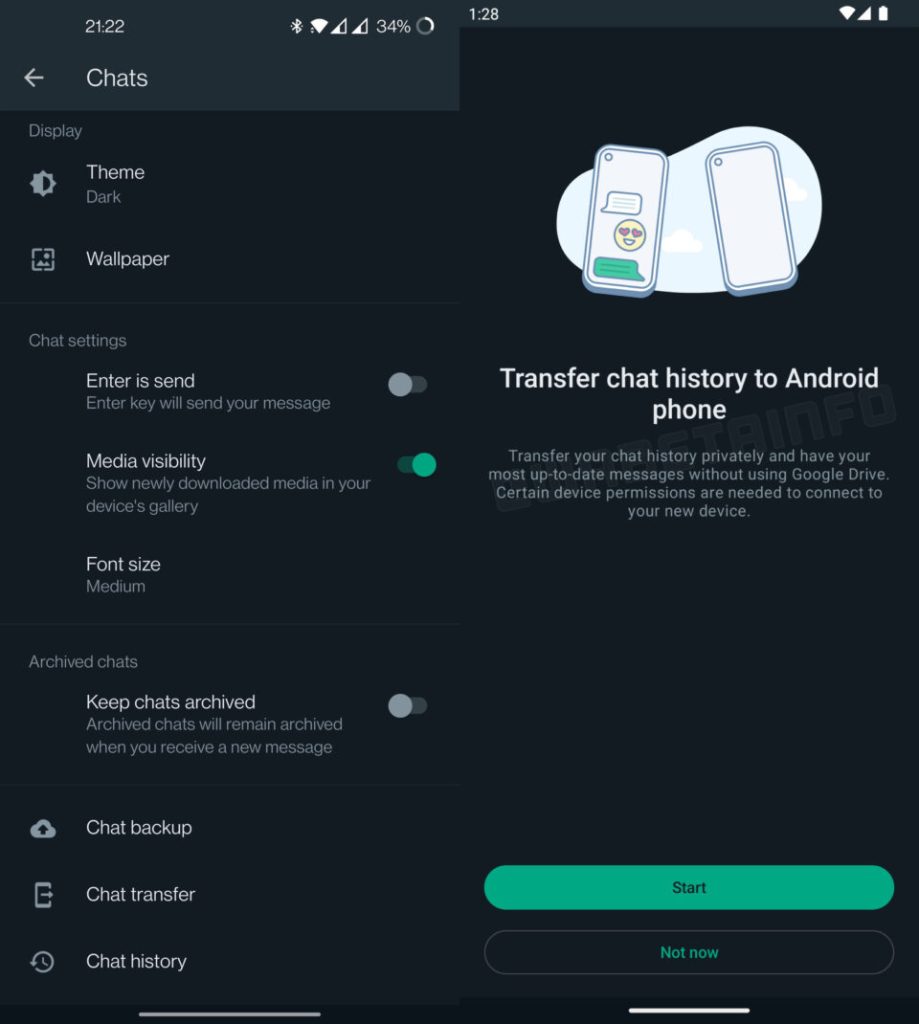
In order to commence the chat transfer process, users are required to select the new feature within their WhatsApp settings and scan a QR code from their new device. It’s important to note that this functionality is not expected to change the process of transferring WhatsApp messages from Android to iOS or vice versa.
While the new feature has been released to a limited number of beta testers, not all users will have access to it within their WhatsApp settings, even if they are utilizing the latest version of the app. As of now, there is no information available regarding the public release date for this chat transfer tool. Additionally, it’s always recommended to back up your chats to Google Drive, as this will allow you to effortlessly retrieve your chats in case of device loss or damage.
Conclusion
WhatsApp, a popular messaging app, has limitations in transferring chats between Android devices, relying on Google Drive backup. However, reports indicate development of a cloud-less transfer method. Beta users on Android v2.23.9.19 can access it, but its public release date remains unknown.

